

How specialized ships are helping offshore wind scale
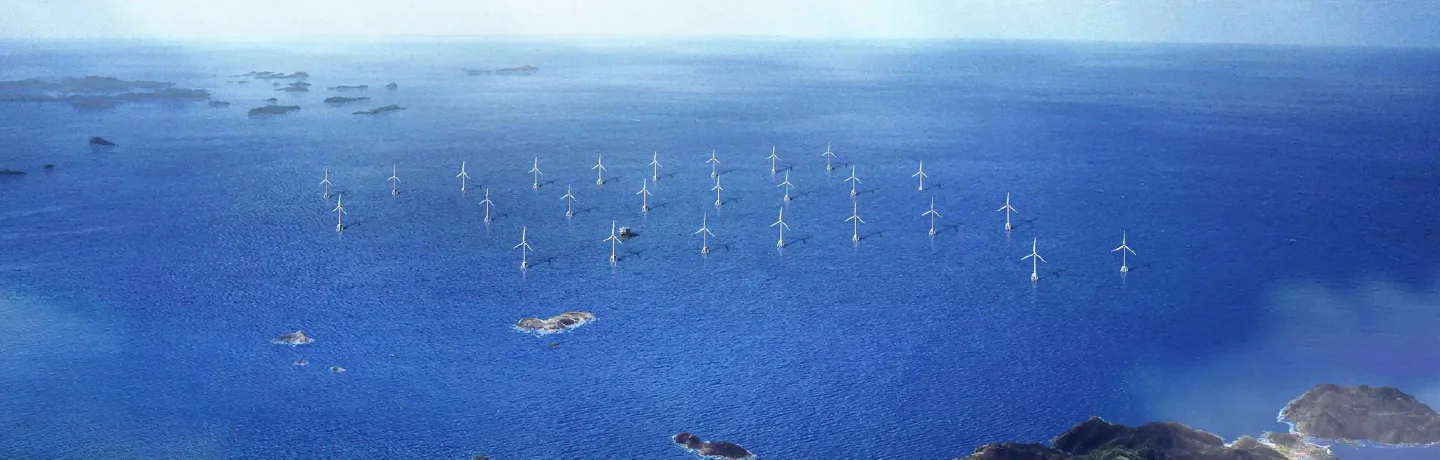
⦁ Global electricity demand is forecast to grow by 3.6% a year through 2030, and offshore wind capacity is expected to rise from 92 gigawatts (GW) at the end of 2025 to 420 GW by 2035, requiring significantly more offshore infrastructure to be built and installed at sea.
⦁ As offshore wind turbines have become larger and more powerful, they have driven the need for increasingly capable wind turbine installation vessels (WTIVs). Unlike conventional ships, WTIVs lower legs to the seabed and raise their hull above the waves, creating a stable platform that allows cranes to install components weighing hundreds of tons with exceptional precision.
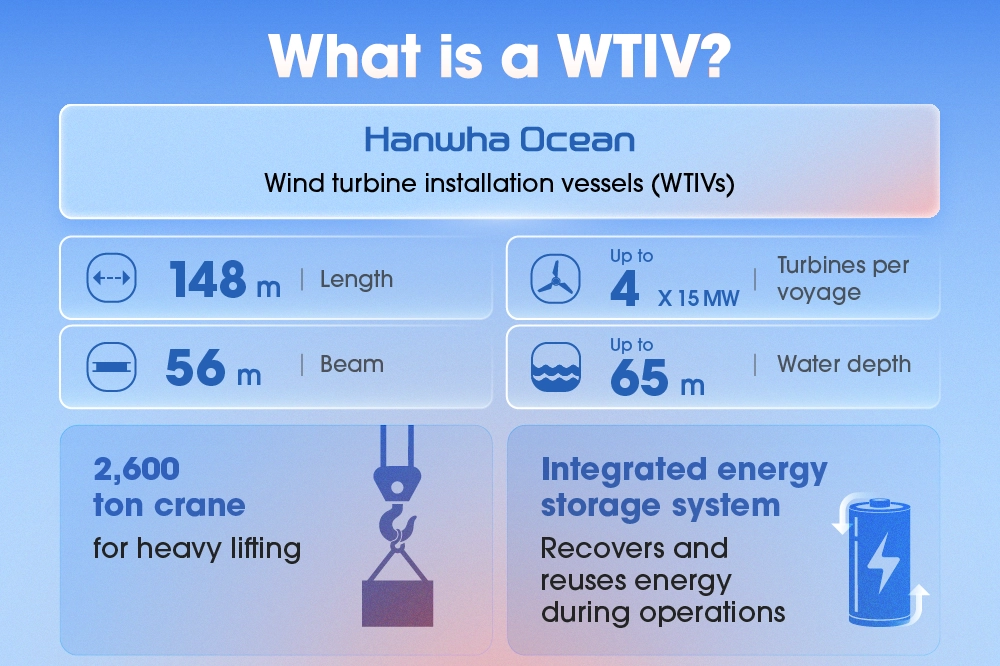
⦁ Hanwha Ocean has delivered two next-generation installation vessels, including the 148-meter Wind Maker handed to Cadeler in early 2025, each able to install up to four 15 MW turbines per voyage in waters up to 65 meters deep, and rated for turbines of up to 20 MW.
The blades on a 15-megawatt (MW) offshore wind turbine are longer than a football field. Assembling one in open water, on a tower standing more than 100 meters above the waves, depends on a ship built to do nothing else.
Rising electricity demand is driving rapid growth in offshore wind. Data centers, electric vehicles and air conditioning are expected to push global electricity demand up by 3.6% a year through 2030, with annual demand growth over the next five years projected to be around 50% higher than the average across the previous decade. The Global Wind Energy Council (GWEC), the international trade association for the global wind industry, forecasts offshore wind capacity to reach 420 GW by 2035. Annual offshore wind installations are expected to double in 2026, while capacity is forecast to grow at around 24% a year through 2030.
As offshore wind expands, the turbines themselves are becoming larger and more powerful. Today's 15 MW turbines have taller towers, longer blades and heavier components than those installed a decade ago, while projects are moving farther offshore into deeper waters. These changes have driven the evolution of wind turbine installation vessels, which require greater lifting capacity, larger deck space and the ability to operate safely in more challenging offshore environments.
What is a wind turbine installation vessel?
A wind turbine installation vessel (WTIV) is a specialized ship built to carry the parts of a turbine out to sea and assemble them in place: the tower, the blades, and the nacelle, the housing at the top of the tower that contains the generator. It also installs the foundations that hold the turbine to the seabed.
The challenge lies in the precision. A conventional ship floats, and a floating ship pitches and rolls with the swell. Lowering a component weighing hundreds of tons onto a tower standing more than 100 meters above the water, to within a few centimeters, cannot be done from a deck that is moving.
A WTIV avoids the problem by lifting itself out of the water. Once on site, it lowers its legs to the seabed and raises its hull clear of the waves, a process known as jacking up. The vessel stops behaving like a ship and becomes a fixed platform standing on the seabed, and its cranes can then lift components into position from a surface that does not move.
That is what separates a WTIV from an ordinary heavy-lift ship. Beyond erecting the turbines, these vessels set the foundations that anchor them and can return to carry out maintenance later in a wind farm's life, working in sea conditions that would stop a floating vessel from operating at all.
Why are these vessels becoming more important?
As offshore wind technology advances, each new generation of turbines places greater physical demands on the installation process. Larger turbines generally involve taller structures and heavier components that must be transported offshore and lifted higher above the water. Modern WTIVs are therefore designed with greater crane capacity, working height, deck space and stability to safely and precisely install the latest generation of offshore wind turbines.
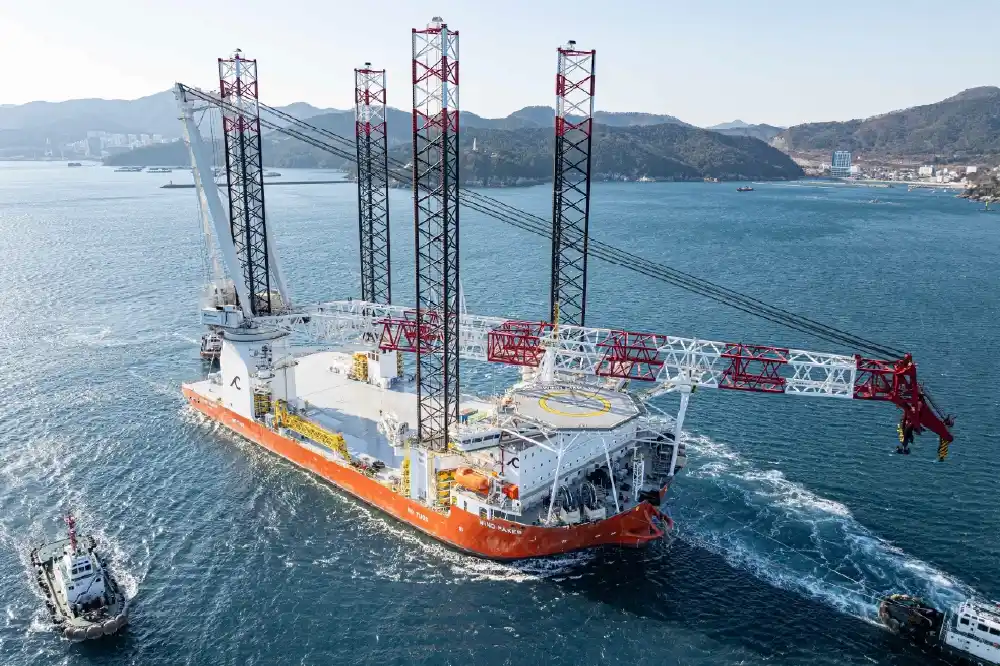
Hanwha Ocean's Wind Turbine Installation Vessel (WTIV)
What does a next-generation installation vessel look like?
Hanwha Ocean's latest vessels are designed to install today's largest offshore wind turbines. Equipped with a 2,600-ton crane, each vessel is built to handle the heavy lifts required for next-generation offshore wind projects. The crane can install turbine towers up to 120 meters tall, enabling the deployment of today's largest offshore wind turbines.
Each vessel measures 148 meters long and 56 meters wide, is rated for turbines up to 20 MW, can carry and install up to four 15 MW turbines in a single voyage.
The ship also carries an energy storage system (ESS) that recovers and reuses energy during operations, demonstrating Hanwha Ocean's integration of energy technology into the vessels it builds.
Two of these ships are already at sea. Hanwha Ocean delivered the first, Wind Maker, to the offshore wind installation contractor Cadeler in early 2025, ahead of schedule, and a sister vessel followed later the same year.
Why does specialized maritime infrastructure matter to the energy transition?
Offshore wind is usually measured in gigawatts and turbine counts, but every turbine depends on specialized installation vessels to transport and assemble it at sea. As turbines become larger and projects move farther offshore, the ability to design and build these vessels has become an increasingly important part of the offshore wind value chain.
As offshore wind turbines continue to evolve, installation vessels must evolve alongside them. Hanwha Ocean is helping meet that challenge by building WTIVs designed for today's largest offshore wind turbines and the requirements of modern offshore wind projects.

Related Content

Get the latest news about Hanwha, right in your inbox.
Fields marked with * are mandatory.
- Non-employee
- Employee