

Inside the smart yards modernizing global shipbuilding
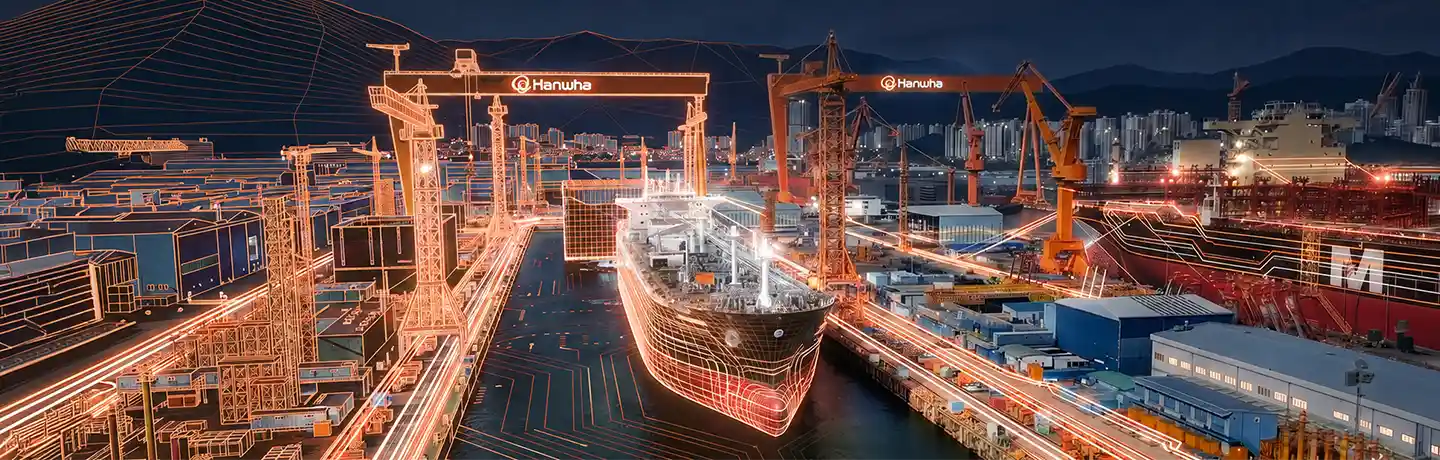
- Shipbuilding underpins global trade, energy supply chains, and national security, yet the industry faces a widening skills gap as experienced workers retire faster than they can be replaced.
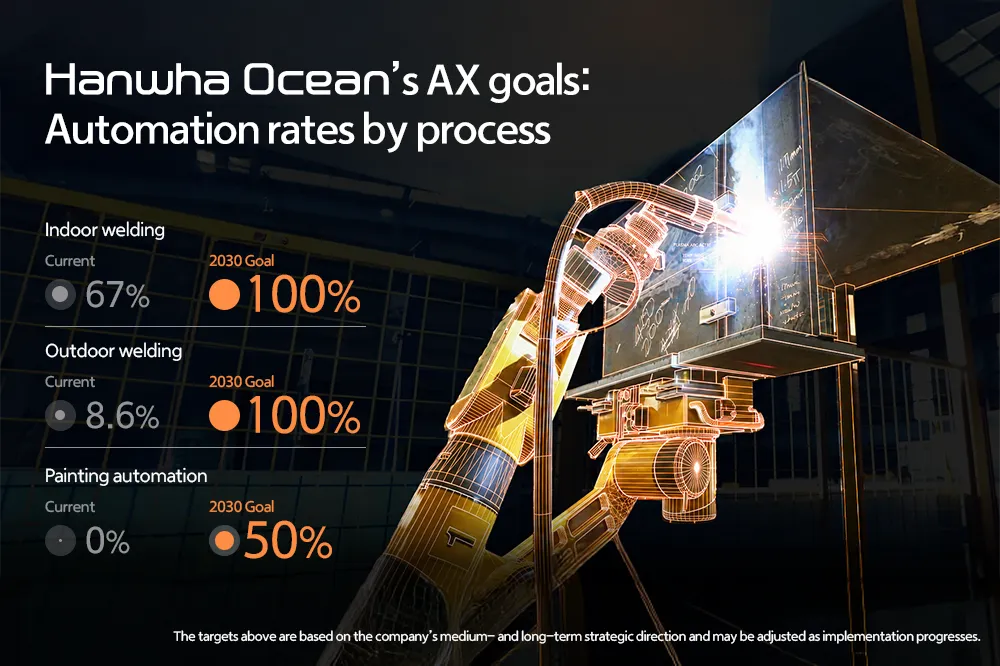
- At its Geoje shipyard, Hanwha Ocean is recording the techniques of veteran welders and using that data to train AI systems that work alongside them. AI now assists with 67% of indoor welding there, and the company is targeting 100% by 2030, supported by robotics and a real-time Digital Production Center.
- Through Hanwha Philly Shipyard, Hanwha Ocean is transferring smart yard technologies from Korea to the United States, contributing to a more resilient global shipbuilding industry.
More than 80% of world trade travels by sea. Energy commodities, food, and industrial raw materials all move between continents aboard ships, which makes shipbuilding far more than an industry that produces vessels. It is a strategic sector that underpins global trade, energy supply chains, and national security. Building a single ship involves tens of thousands of processes, and turning a design into a finished vessel still depends on skills built up over years of hands-on work.
That expertise is now under pressure. South Korea's shipyards employ around 125,000 people, well below the roughly 200,000 they employed at their 2014 peak, according to the Korea Offshore & Shipbuilding Association. Although the workforce is getting older, adding to the industry's long-term challenge of attracting a new generation of skilled workers, companies are expanding training programs and looking for new ways to attract younger workers. To carry that knowledge into the next generation, shipbuilders are turning to smart yards, where AI, robotics, and digital production management capture expertise and scale it across operations.
How can AI preserve shipbuilding's hardest-won expertise?
A large LNG carrier, the vessel type Korean yards are best known for, runs to roughly 300 meters, about three football fields laid end to end, and is wide enough to span an eight-lane road. A ship that size is never built in one piece: hundreds of steel blocks are fabricated separately, then fitted together. The work of joining them is welding, and a weld that is even slightly imperfect can fail under the force of the waves and let seawater in. That is why welding is treated as a core technology rather than a routine task.
The difficulty comes from the steel itself, as plates vary by as little as a millimeter, and those small differences change the angle, speed, and movement a weld requires. For that reason, correct welding has long depended on the intuition of skilled workers rather than any manual, which is what makes the knowledge so hard to replace.
Hanwha Ocean's smart yard initiative sets out to preserve it. The company records the work patterns and decisions of veteran welders as data, then trains AI systems to replicate them on the shop floor. AI transformation has now reached 67% of indoor welding at its Geoje shipyard, and Hanwha Ocean aims for full welding automation and 50% AI adoption in surface preparation and painting by 2030.
As the technology advances, the worker's role is changing rather than disappearing. Robots increasingly handle the most hazardous tasks, those involving high heat, sparks, and confined spaces, while skilled workers move into supervisory roles, operating several robotic systems at once and managing overall quality.
What does it take to run one of the world's largest shipyards in real time?
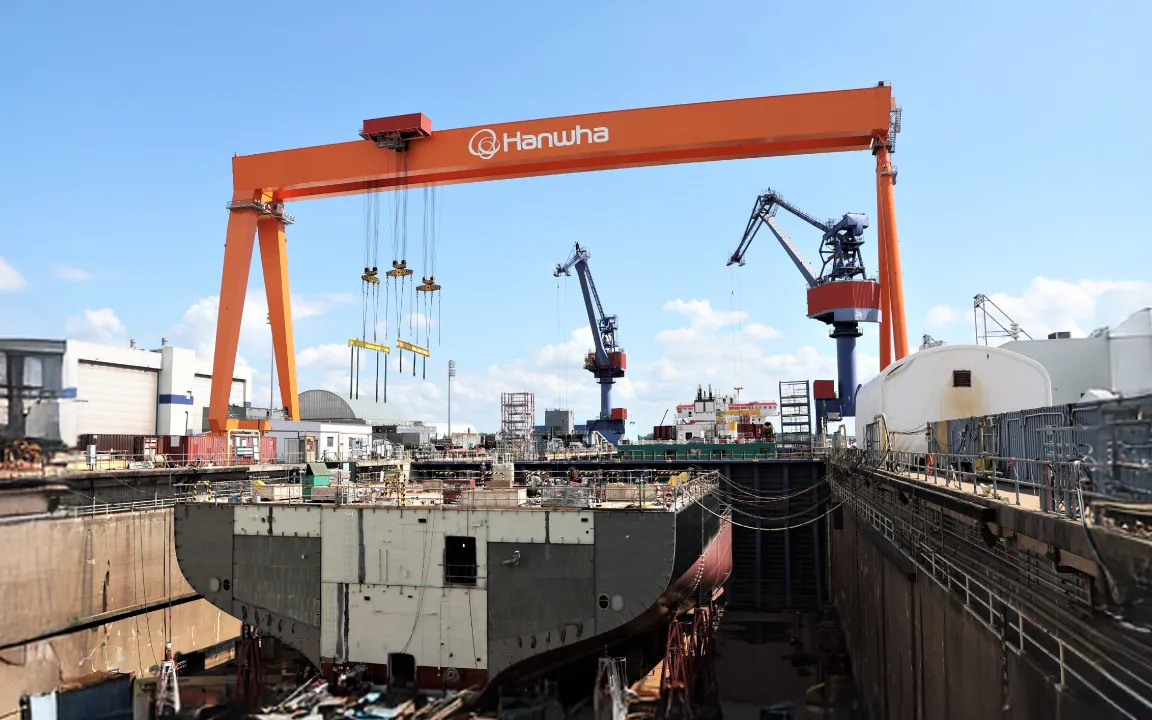
Hanwha Ocean's Geoje shipyard covers about 5 square kilometers (1,225 acres). Dozens of ships take shape across the site at once, each made up of hundreds of blocks that move through a set sequence of outfitting, painting, and installation. At any moment, thousands of blocks are progressing through different stages, and keeping construction on schedule depends on knowing exactly where each one is and when it must move next.
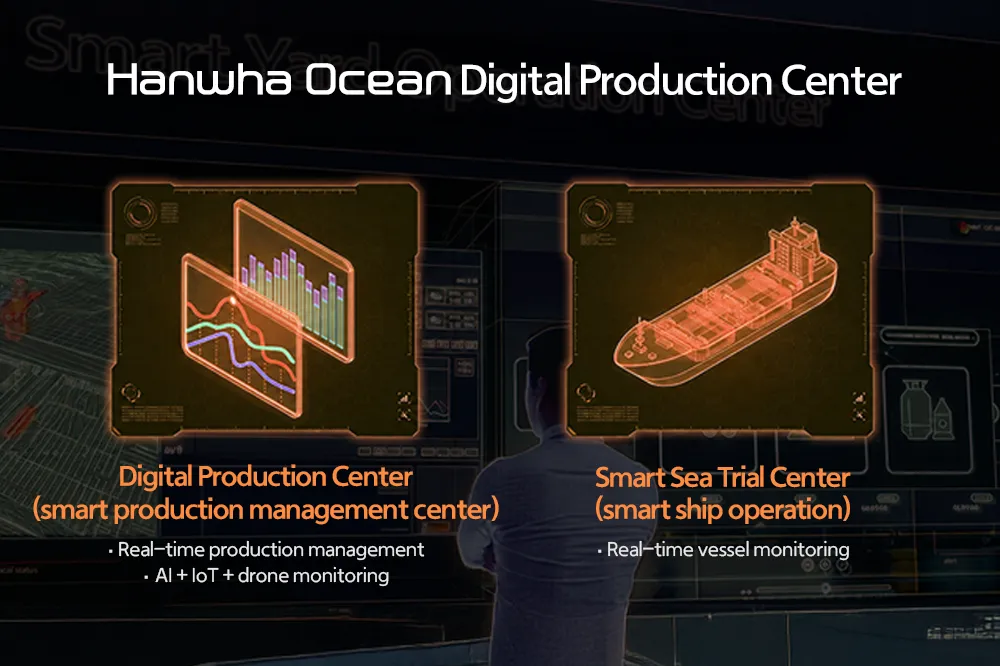
To manage that complexity, Hanwha Ocean built what it describes as Korea's first Digital Production Center for shipbuilding. Much like an airport control tower, it gives a real-time view of the whole yard without managers having to inspect each location in person. Drones and IoT sensors refresh block locations and process data every 30 minutes, and simulation can forecast disruptions such as severe weather before they affect operations.
The same infrastructure extends out to sea. At the Smart Sea Trial Center, engineers onshore monitor a vessel's performance, fuel use, and equipment during sea trials, diagnosing issues remotely that once required a trip offshore. The data gathered then feeds back into the design of future ships, supporting Hanwha Ocean's record of keeping deliveries on schedule.
How are smart yard technologies expanding across the Pacific?
The case for this approach reaches well beyond Korea. In a report on U.S. shipbuilding, Deloitte identified smart manufacturing, standardized designs and modules, interoperable supply-chain data, and robotics as key to helping American yards raise productivity as they contend with a limited workforce and constrained yard capacity.
Hanwha Philly Shipyard, part of Hanwha since 2024, is the first yard outside Korea to adopt the technologies proven at Geoje. An expansion plan aims to lift the yard's annual output to as many as 20 vessels, adding two dry docks, three piers, and a new block production facility alongside automation and smart yard systems.
The digital groundwork is already in place. Development of enterprise resource planning (ERP) and production management systems began in November 2024 and moved into full implementation in March 2025, with deployment targeted for November 2026. Once complete, the platform is expected to more than triple the yard's level of digitalization. Welding robots proven at Geoje are starting to be introduced in 2026 as part of an ongoing transfer of smart yard technologies between the two yards.
Why is digital transformation becoming essential to shipbuilding’s future?
Technological change in shipbuilding is about more than new equipment. It reshapes how knowledge is preserved and shared, as the instincts of veteran workers become data, and that data becomes the language the shipyard runs on. These systems are built to support the people who use them. Automation records craftsmanship rather than replacing it, and it augments the workers whose judgment it captures, taking on the heaviest and most hazardous work while making expertise once held by experienced workers available across an entire operation.
Those capabilities are beginning to travel in both directions, from Geoje to Philadelphia and back, as lessons learned in the United States feed into operations in Korea. Through smart yard technologies, Hanwha Ocean is contributing to a more competitive global shipbuilding industry and a more resilient future for maritime manufacturing.
Related Content


Get the latest news about Hanwha, right in your inbox.
Fields marked with * are mandatory.
- Non-employee
- Employee